“Tell a story, not a sales pitch” is incomplete advice. The branded content that lasts is funded like a story and measured like a story, not merely like an ad. These branded content examples show how brands made entertainment, participation, or personal discovery worth seeking out, then connected that attention to a business objective.
Most brand videos fail because the product is the plot. Remove the logo and the feature list, and there's nothing left to follow. Stronger work gives viewers a question, a character, a comparison, or a result they want to see.
Each campaign below earns its place through the same lenses: story engine, meaning what keeps someone watching; business mechanism, meaning how attention could influence demand; and borrowable move, meaning something a small team can make this week. The useful lesson isn't to reproduce a famous campaign's production budget. It's to understand the decision underneath it.
Keep distribution separate from the creative idea. The LLMrefs guide to GEO is useful companion reading when you're considering how people might discover explanatory brand content through generative search, but discoverability won't rescue a weak premise.
If you have five minutes, start with BMW for the clearest example of a product earning its role inside a story. If your budget is small, start with Blendtec. Its repeatable question matters more than expensive production.
1. Red Bull Stratos and Felix Baumgartner's Record-Setting Jump
A record attempt can hold attention before the audience knows what the sponsor sells. Red Bull Stratos made the central question clear: could Felix Baumgartner complete the jump?
According to Kinter Media's account of Red Bull Stratos, Baumgartner reached an exit altitude of 127,852.4 feet, and the campaign's YouTube videos later accumulated more than a billion views.

The story engine was an uncertain outcome, built through preparation, technical challenges, and a visible finish. The business mechanism was brand association: the feat gave audiences a concrete expression of Red Bull's adventurous identity.
Borrow the Mission, Not the Stunt
A small outdoor-equipment team could follow a repair specialist restoring a badly damaged hiking pack. Show the pack's condition, the choices made during the repair, any failed attempt, and the final load test. The story has a clear result to anticipate without requiring a dangerous stunt.
Build the footage around one question: Can this pack return to the trail instead of going in the bin? That gives viewers a reason to watch, while the repair demonstrates the product's relevance.
- Capture preparation: Record decisions and setbacks, not only the polished result.
- Plan distinct edits: Give documentary viewers context and social viewers a clear challenge.
- Define the next action: Direct interested viewers to a relevant guide, event, or service.
Fund a worthwhile attempt, and accept that the outcome may not go as planned. The trade-off is control: decide before production whether you're willing to publish an honest result if the repair fails.
2. BMW Films and The Hire
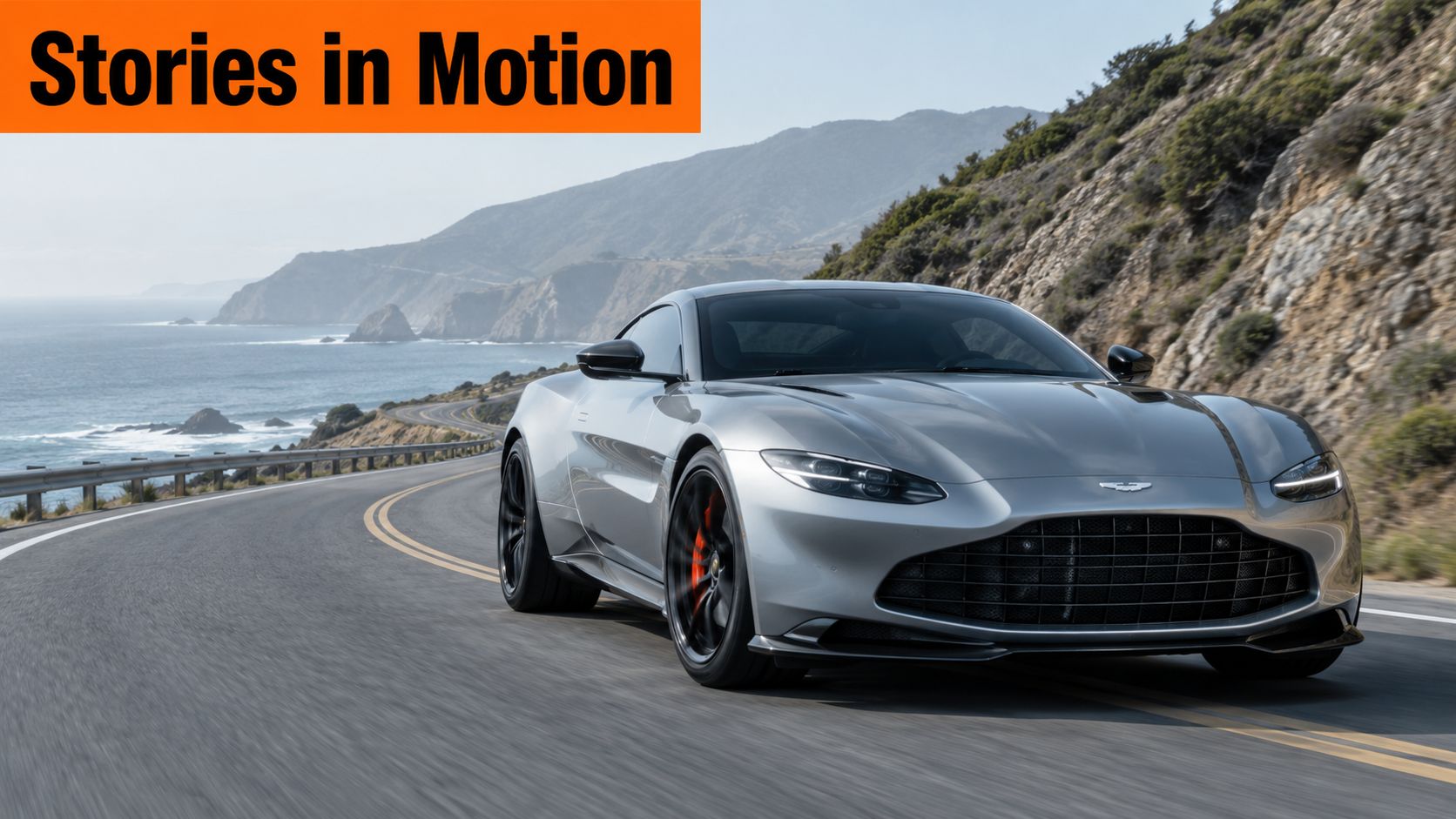
BMW Films made the car part of the plot. In The Hire, Clive Owen's recurring driver connects a series of separate stories, each built around tension and a reason to keep watching.
The series began in 2001, and BMW reportedly recorded more than 100 million views, according to Cannes Corporate's account of branded entertainment. The audience came for the films, while the car's role in each story made its capabilities part of the experience.
Give the Product a Job
The story engine is a character solving a problem under pressure. The business mechanism is capability shown through action: viewers can infer what the car contributes without stopping for a list of claims.
The move a small team can borrow is simple: write the problem before the product claim.
A scheduling-software company, for example, could follow a restaurant manager handling an unexpected absence before service. The tension is whether the team can reorganize and support one another. The software helps with the problem, but the manager stays at the center of the story.
Keep each installment clear on its own. A recurring character or familiar opening can build recognition, but viewers should not need to watch earlier episodes to understand the stakes.
A dashboard tour breaks the scene's momentum. Show the manager making a decision, contacting the team, and getting a useful response instead. BMW's production scale is not the part to copy. The useful lesson is to make the product matter inside a story the audience would follow without the sales pitch. Then check whether viewers understood what the product did.
3. Blendtec and Will It Blend?
A strong product demonstration can also be entertainment. Blendtec's Will It Blend?, featuring founder Tom Dickson testing unusual objects, turns a narrow capability claim into an answer viewers want to see.
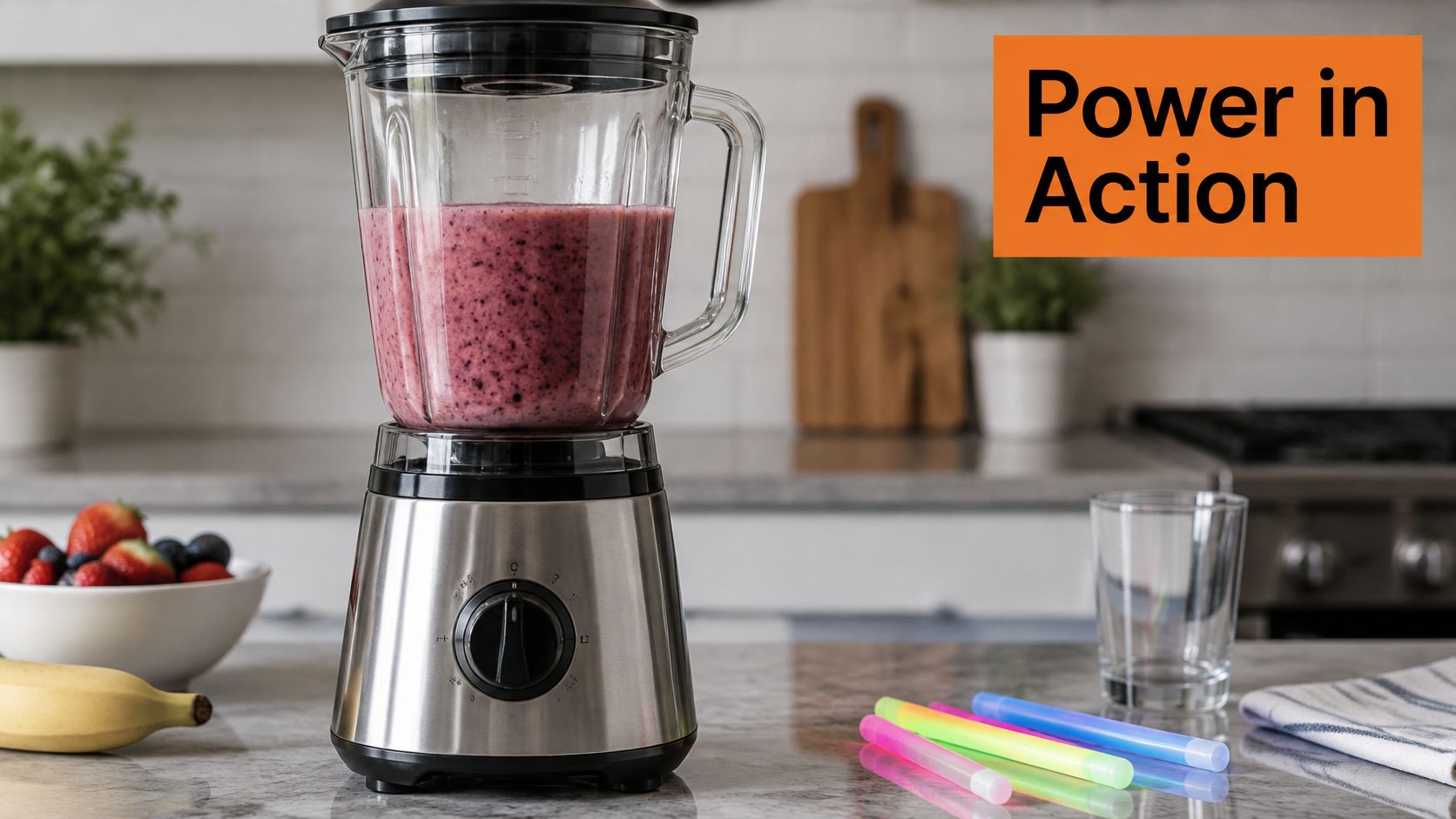
The blender pictured below represents the product category, not a campaign test.
The story engine is a prediction followed by a reveal. The business mechanism is visible proof, although an entertaining stress test shouldn't be treated as evidence for every practical buying criterion.
A viewer might remember the spectacle without learning whether the blender suits everyday cooking. That's the trade-off: attention and purchase usefulness aren't interchangeable.
Build a Safe, Repeatable Test
For a small team, borrow the question-and-result structure rather than the destructive testing. A storage-products company could ask whether a packed lunch container stays sealed during an ordinary commute simulation.
Show the starting condition, explain the test, and reveal the outcome without hiding inconvenient details. Invite viewers to suggest realistic situations for future episodes.
The campaign's recognizable question is easy to understand in video form.
- Open with the test: Skip the company introduction.
- Make the result legible: Use clear framing, labels, and an unambiguous finish.
- Respect safety boundaries: Don't encourage viewers to blend electronics, glass, or hazardous materials.
A useful script starts with: Will this lid stay sealed when the bag tips over? A weaker script starts with a paragraph about engineering.
Keep the repeated format consistent, but change the practical question. Familiarity helps viewers understand what they're about to watch; repetition without a fresh question gives them little reason to return.
4. Dove and Real Beauty Sketches
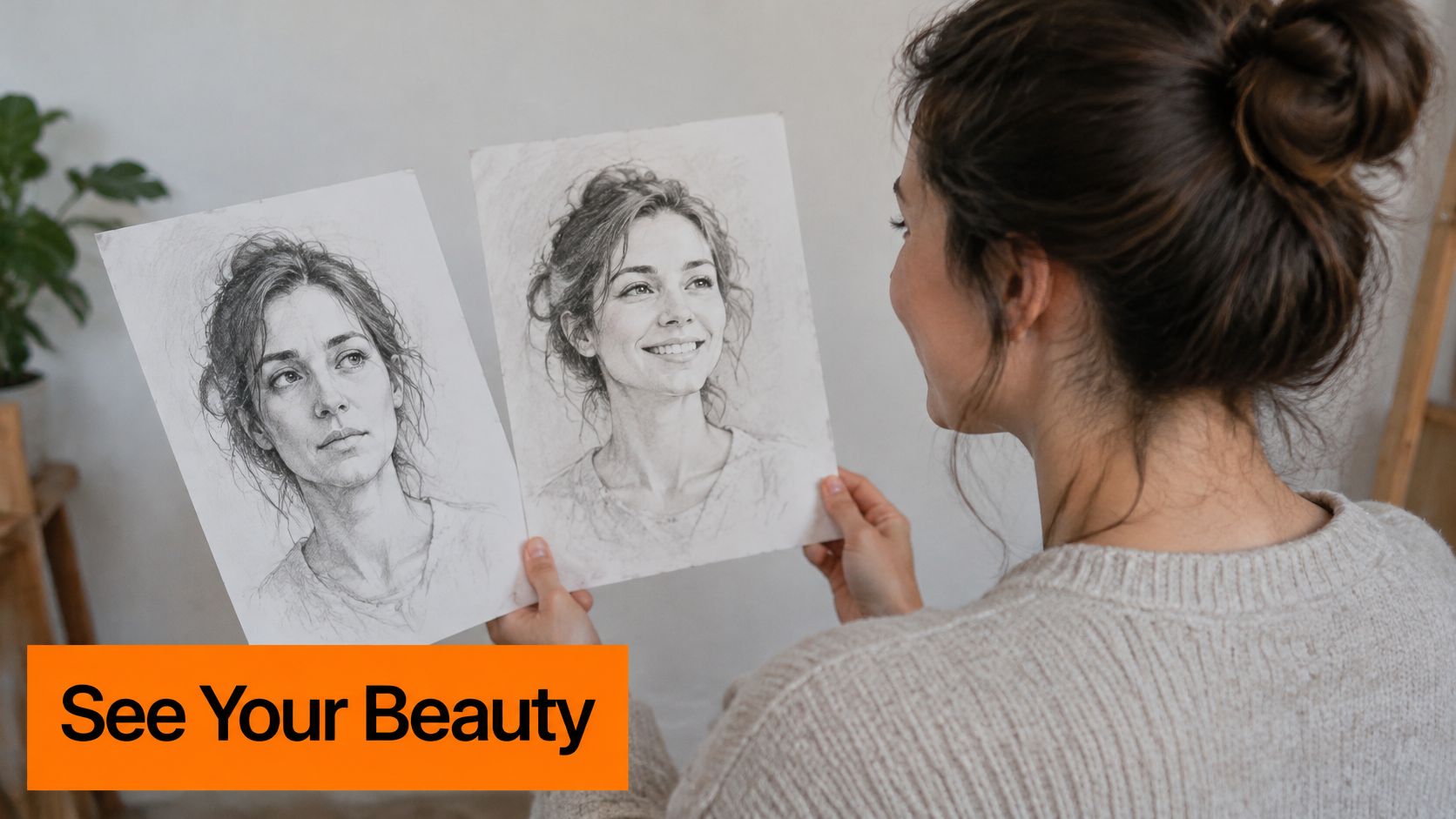
Dove's Real Beauty Sketches puts a comparison at the center of an emotional story. Women describe their appearance to a sketch artist, then strangers describe those same women, creating contrasting portraits for participants to consider.
The story engine is the gap between self-perception and another person's description. The reveal works because viewers can understand the comparison without a technical explanation.
This illustration reflects the portrait-comparison premise.
The business mechanism is emotional alignment with a brand position around beauty and self-image. That isn't the same as proving that a particular product caused a beneficial outcome.
Treat the film as constructed storytelling, not as a controlled psychological experiment. Casting, editing, participant selection, and the framing of the reveal all affect what audiences see.
Borrow the Comparison Carefully
A professional-development company could invite participants to describe their strengths, then compare those descriptions with consented feedback from colleagues. The useful question would be whether people overlook skills others value.
Give participants control over what becomes public. Don't turn a vulnerable reaction into promotional material just because it makes a compelling edit.
Editorial safeguard: Let participants disagree with the brand's preferred conclusion.
The borrowable copy move is a plain contrast: What you notice about your work isn't always what your colleagues value most. Follow it with an exercise or resource, not an immediate product pitch.
This approach asks more of a team than filming testimonials. You need thoughtful consent, careful interviews, and an edit that preserves meaning. If the comparison only works after removing context, it isn't strong enough to publish.
5. Old Spice and The Man Your Man Could Smell Like
Old Spice's campaign combined Isaiah Mustafa's direct address with absurd, fast-changing situations. Its personalized response videos extended that style into audience interaction rather than treating the original advertisement as the finished idea.
The story engine was comic escalation inside a recognizable voice. The business mechanism was renewed relevance, reinforced by replies that gave people a reason to participate.
The borrowable move isn't a particular joke. It's a response format with boundaries: a consistent speaker, a recognizable opening, and an answer tied to something a person asked.
Prepare the Voice Before Publishing Replies
A small coffee brand could answer customer brewing questions using a calm host and an increasingly overcomplicated visual prop. The information still needs to be useful, even when the presentation is playful.
Create a voice sheet covering what the host sounds like, which jokes fit, and what topics require a straightforward answer. The brand voice tips for X creators offer a useful companion to that exercise.
- Keep the audience's question visible: Viewers should understand why the reply exists.
- Separate humor from support: Complaints about billing, safety, or discrimination deserve direct handling.
- Approve the boundaries early: Don't improvise brand policy while recording.
For teams turning rough scripts into publishable replies, these approaches to making marketing copy sound more human can help preserve conversational phrasing.
The trade-off is operational. Personalized responses require someone to select questions, check facts, approve jokes, and publish while the exchange still feels relevant.
Don't promise ongoing interaction if your team can only support a launch-day burst. A smaller, dependable response series is more credible than inviting questions you won't answer.
6. Coca-Cola and Share a Coke
Share a Coke made the packaging part of the content. Replacing familiar branding with people's names gave shoppers a personal search task and an obvious reason to share a photograph.
In Australia, the campaign sold more than 250 million bottles and cans during one summer, according to Oppizi's account of the campaign. That is a reported commercial outcome, not proof that personalization alone caused every purchase.
The story engine was recognition: finding yourself or someone you know in an everyday product. The business mechanism connected discovery, purchase, gifting, and sharing in the same experience.
Make Participation Useful Without a Post
A small stationery company could offer notebook covers built around customer-selected roles, such as gardener, sketcher, or recipe keeper. Buyers would get something personally meaningful whether or not they shared it.
The borrowable copy move is an invitation with a clear object: Choose a notebook for the person who always writes it down. That's more concrete than asking people to celebrate connection.
- Localize the choices: Names, roles, and language need to fit the people you're serving.
- Provide an alternative: Don't make customers feel excluded because their identity isn't on a preset list.
- Keep the purchase clear: Personalization shouldn't obscure size, materials, availability, or delivery details.
The same discipline applies to writing useful product descriptions: a personal hook works best when buyers can still find the facts they need.
Avoid copying the campaign as a request to photograph a logo. People need a reason to care before you ask them to distribute your content.
Measure participation and shopping behavior separately. Someone enjoying the customization experience isn't automatically a new customer, and someone buying a personalized gift might never post about it.
7. Patagonia and Don't Buy This Jacket
Patagonia's Don't Buy This Jacket paired a deliberately contradictory purchase message with discussion of production's environmental costs. Its connection to the Common Threads Initiative gave the message somewhere practical to lead through repair and reuse.
The story engine was the contradiction between a retailer's apparent interest in selling and its request that readers reconsider buying. The business mechanism was credibility among people who value durability and more deliberate consumption.
That mechanism depends on actions beyond the headline. A brand can't borrow Patagonia's stance by writing a provocative sentence.
A bold claim is useful only when customers can inspect what backs it up.
Put the Service Behind the Statement
Say a furniture maker publishes: You might not need a new desk. The next page should help readers assess loose joints, worn finishes, and replaceable hardware, then offer a genuine repair route.
That creates a practical alternative to purchase. Without it, the headline is just a sales tactic wearing an anti-sales costume.
The borrowable move is to write a line your business can support operationally:
- Offer a real alternative: Repair guidance, replacement parts, or a suitable resale route.
- State the limits: Explain what you can repair and when replacement makes sense.
- Check the customer journey: Don't contradict the message with aggressive purchase prompts.
The useful lesson in breaking familiar marketing patterns is to challenge a convention for a reason, not merely to sound different.
This approach can create tension with short-term sales targets. Resolve that internally before publication, including how you'll evaluate service use, repeat purchases, and customer trust.
If the company won't fund the alternative behavior, choose a different creative premise. Customers shouldn't have to discover that the headline promised more conviction than the business could deliver.
8. Spotify Wrapped
Spotify Wrapped makes listeners the subject of the content. Personal listening summaries turn activity inside the product into a visual story people can recognize, interpret, and choose to share.
The story engine is self-discovery, sometimes mixed with surprise or amusement. The business mechanism combines product re-engagement with voluntary distribution: users share something about themselves that also identifies the service.
The key distinction is ownership of attention. A generic company recap asks people to care about the company's year; a personal recap helps them reflect on their own.
Turn Records Into a Useful Reflection
A small learning platform could create an opt-in recap of topics a learner explored, exercises they completed, and subjects they returned to. Give the learner a private version first, then let them select what appears on a public card.
The borrowable copy move is: You kept coming back to practical photography. Follow that observation with relevant activity, not an unsupported personality judgment.
- Use understandable inputs: Explain what activity shaped the summary.
- Let users withhold details: Sharing should be optional and selective.
- Design for the destination: A mobile card needs readable text and a clear focal point.
Platform fit matters. A Frontiers in Communication analysis of branded-content campaigns identified narrative cohesion, cultural relevance, and platform-specific tailoring as recurring factors associated with stronger engagement.
Don't collect sensitive information just to create a more interesting recap. Use records your product legitimately needs, explain the calculation, and give users a way to question inaccurate results.
The strongest small-team version might be a private email rather than a public campaign. Usefulness comes before shareability, especially when the subject is someone's learning, finances, health, or work.
Format, proof, replication cost and the one move worth borrowing from each campaign
| Campaign | Format | What It Proved | Replication Cost | Move to Borrow |
|---|---|---|---|---|
| Red Bull Stratos | Live extreme-sports event, documentary, and social clips | A high-stakes story can attract audiences without relying on product placement | Extremely high; requires major production, technical expertise, and safety planning | Document the process and plan both long-form and short-form content |
| BMW Films: The Hire | Cinematic online short-film series | Branded entertainment can showcase a product without interrupting the story | High; requires premium production and talent | Use a recurring character and let the product solve a story problem |
| Blendtec: Will It Blend? | Short, repeatable product-demonstration videos | A simple demonstration can make a functional feature entertaining and memorable | Low; straightforward to produce regularly | Repeat a clear format and invite audience suggestions |
| Dove: Real Beauty Sketches | Emotional experiment-style short film | A simple comparison and authentic participants can make a brand message highly shareable | Moderate; depends on participant casting, production, and a credible message | Use real people and connect the emotional story to meaningful action |
| Old Spice: The Man Your Man Could Smell Like | Comedic ad followed by rapid personalized video replies | A distinct voice and timely audience responses can sustain a campaign beyond its launch | High; requires fast production and coordinated social operations | Set a consistent reply style and answer real audience questions |
| Coca-Cola: Share a Coke | Personalized packaging and social-sharing campaign | Simple personalization can make a mass-market product feel personal | High; requires packaging and supply-chain coordination | Pair a product detail with an easy, locally relevant sharing prompt |
| Patagonia: Don't Buy This Jacket | Full-page print ad linked to a repair-and-reuse initiative | A counterintuitive message can build trust when backed by real action | Moderate; depends on credible commitments and follow-through | Support bold claims with a concrete program |
| Spotify Wrapped | Annual personalized data recap designed for social sharing | Product data can become personal content people anticipate and share | High; requires a large user base and rich data | Turn existing data into a simple, recurring shareable recap |
How to Turn These Branded Content Examples Into Copy You Can Ship
Across these branded content examples, three useful patterns recur: a repeatable format, proof the audience can see, and a story the brand funds rather than interrupts. Pick exactly one pattern to test next quarter instead of copying a famous format wholesale.
Start with the decision you want someone to reconsider. Then build a practical brand messaging strategy around the claim you can support, the audience who needs it, and the evidence you'll show.
Rewrite the Claim Around Observable Details
Before
Our revolutionary storage solutions empower busy families to transform chaotic spaces into beautifully organized environments.
After
Find the spare charger without emptying the drawer. These dividers adjust around cables, batteries, and the small things you use every day.
The revised version names a situation and a product behavior. It still needs verification against the actual product, but readers can understand what they're being offered.
Borrowed structure is fine; borrowed phrasing isn't. Generic openings still read like templates after you swap in a different brand name.
Quick FAQ
How much did these campaigns cost?
The cited accounts don't establish comparable budgets. Build your own estimate around production, permissions, distribution, community management, and measurement rather than guessing from the finished film.
Should small teams attempt branded content?
Yes, with a bounded premise. A useful demonstration or consented customer comparison is more manageable than a live spectacle, and it gives you fewer dependencies to coordinate.
How should you measure it?
Choose the intended change before production, then compare exposed and unexposed audiences where feasible. An Amazon Brand Lift study reported a 4.2-percentage-point increase in consideration for Volvo's documentary campaign, according to Amazon Ads' case study, illustrating an outcome beyond views.
Does adapted copy need an originality review?
Yes, especially when you draft beside an example. Check distinctive phrases and campaign devices manually; an originality tool can support that review but can't replace editorial judgment.
Keep the Rewrite Natural
Read the draft aloud and remove phrases nobody on your team would say. An AI-signal check can offer another diagnostic, but it doesn't establish authorship or quality.
Our custom Writing Style profiles can learn from uploaded samples or a description of your preferred tone. We can help reduce obvious AI-like patterns, while detector results vary by content type, tool version, and reliance on generic phrasing.
For brand copy you're adapting, Lumi Humanizer helps adjust cadence and word choice while keeping the meaning intact. Bring a draft with a clear audience, a supportable claim, and examples of your preferred voice; teams managing that voice across many pieces can review the available plans.